Scales: Build a Note Collection
When you listen to a piece in a clear key, the seven notes of its diatonic scale do not feel equal. Some degrees feel like resting points, while others feel poised to tip forward or downward. That sense of gravity comes from how whole steps (W) and half steps (H) are arranged across the octave.
One of the clearest ways to build any major scale without memorising key signature charts is to divide the eight notes into two symmetric four-note groups called tetrachords. Each major tetrachord follows the pattern Whole – Whole – Half, and the two tetrachords are joined in the middle by a whole step.
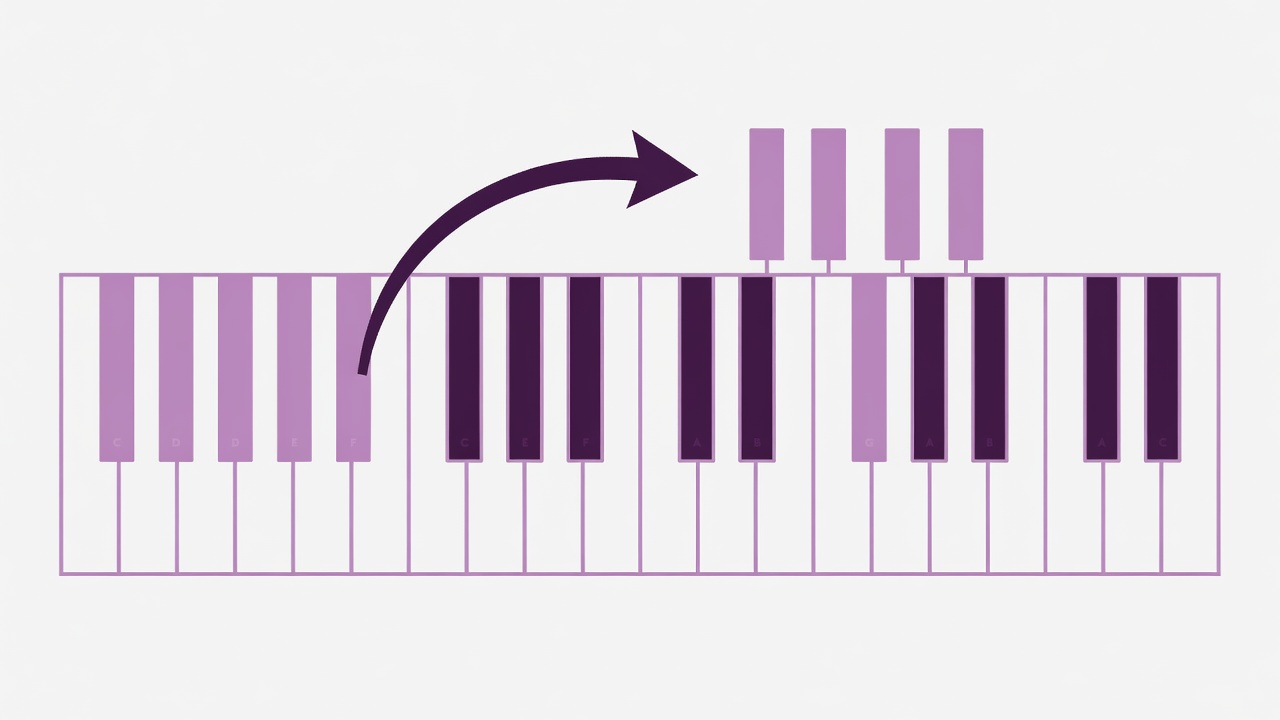
Figure 1.1: The upper tetrachord of C Major (G–A–B–C) becomes the lower tetrachord of G Major, explaining why keys a fifth apart differ by only one sharp.
Symmetric Positions Around the Tonic
Students are often puzzled by why degree 3 is called the Mediant and degree 6 the Submediant, or why degree 4 is the Subdominant. If you picture the Tonic (degree 1) in the center rather than only at the bottom, the symmetry becomes immediately visible:
| Degree | Traditional Name | Position Relative to Tonic | Melodic Behaviour in Practice |
|---|---|---|---|
| 1̂ | Tonic | Central home pitch | Point of ultimate rest and harmonic departure. |
| 2̂ | Supertonic | One step above Tonic | Mobile bridge note; steps down to 1̂ or pauses on Half Cadences. |
| 3̂ | Mediant | Halfway between Tonic and Dominant going up | Determines whether the collection sounds major or minor. |
| 4̂ | Subdominant | One fifth below Tonic (mirror of Dominant) | In major keys, leans downward by half step into 3̂. |
| 5̂ | Dominant | One fifth above Tonic | Harmonic pillar; stabilises the upper half of the scale. |
| 6̂ | Submediant | Halfway between Tonic and Subdominant going down | Root of the relative minor collection; steps down to 5̂. |
| 7̂ | Leading Tone / Subtonic | Half step (or whole step) below Tonic | When a half step below 1̂, pulls strongly upward to resolve. |
Why Minor Keys Adjust Degrees 6̂ and 7̂
Unlike the major scale—which already has a natural half step between 7̂ and 1̂—the Natural Minor scale (Aeolian mode, codified alongside Ionian by Heinrich Glarean in Dodecachordon, 1547) has a whole step between its seventh degree and the tonic. In C minor, that seventh note is B♭.
Choose how you want to treat the sixth and seventh degrees as a melody climbs toward High C: